
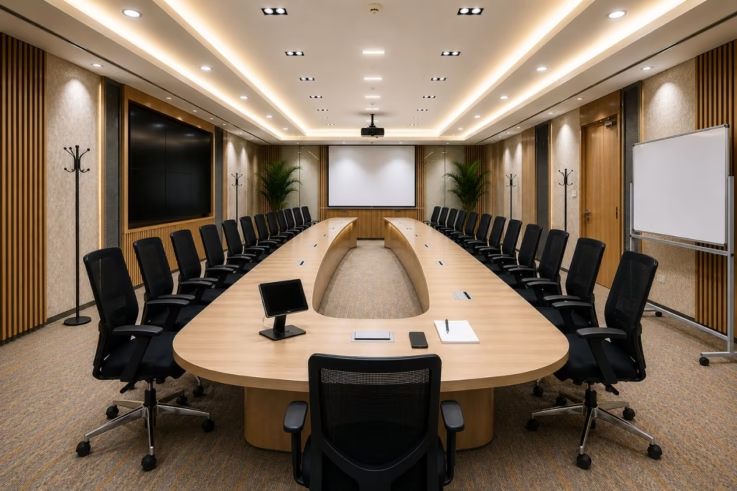
When businesses think about office interiors, the conversation often starts with aesthetics.
What colour should the walls be? Which furniture looks premium? Should the office have glass partitions, wooden finishes or exposed ceilings?
But a successful workplace is about much more than what meets the eye.
Every surface, finish and material inside an office has a role to play. Flooring needs to withstand heavy footfall. Acoustic materials need to manage noise. Furniture finishes need to survive years of daily use. Wall and ceiling systems influence comfort, maintenance and even the perception of space.
This is where material intelligence is changing the way businesses approach corporate office interior design.
Material intelligence means selecting materials not only because they look good, but because they perform well, last longer, support sustainability and contribute to a better workplace experience.
In modern corporate interior design, the material palette is no longer simply a finishing decision. It is a strategic one.
What Is Material Intelligence in Office Design?
Material intelligence is essentially about making smarter material decisions.
Instead of asking only, “Does this material look premium?”, an experienced workplace design team should also consider:
- How will it perform under daily use?
- How easy will it be to maintain?
- Does it support acoustic comfort?
- What is its environmental impact?
- Is it suitable for the local climate?
- Can it be repaired or replaced easily?
- Does it support the company’s brand identity?
- What is its lifecycle cost?
This approach turns office interior design materials from decorative elements into functional components of the workplace.
For companies planning corporate interior design in India, this shift is particularly relevant. Offices need to balance employee experience, operational efficiency, sustainability, aesthetics and long-term value.
Materials Can Influence Workplace Comfort
A visually impressive office can still be uncomfortable.
Acoustics are a good example.
Open-plan workplaces encourage collaboration and flexibility, but large spaces with hard surfaces can allow sound to travel and reflect easily. This can affect concentration, privacy and meeting quality.
Acoustic ceilings, wall panels, carpets, upholstered furniture and appropriately designed partitions can help manage reverberation and unwanted noise.
The WELL Building Standard also recognises acoustic comfort as an important element of a healthy workplace.
This means acoustic considerations should be integrated into workplace design from the beginning rather than treated as an afterthought.
A meeting room, focus area, collaboration zone and cafeteria all have different acoustic requirements. The material selection should respond to the purpose of each space.
Durability Is Part of Good Design
A material can look exceptional on opening day and still be the wrong choice for a corporate workplace.
Commercial offices experience significantly more wear than residential spaces. Corridors experience constant foot traffic. Workstations are used every day. Furniture is moved. Surfaces are cleaned frequently. Pantry areas deal with spills and moisture.
This makes durability an important consideration when selecting office interior design materials.
A slightly higher upfront investment in a durable finish can sometimes be more economical than repeatedly replacing a cheaper material.
The better question is therefore not simply:
“What does this material cost?”
It is:
“What will this material cost the business throughout its lifecycle?”
Installation, maintenance, replacement, downtime and disposal all contribute to the real cost of a material.
Good commercial interior design considers this lifecycle value before materials are approved.
Sustainability Starts With Material Selection
Sustainable office design is no longer simply about adding indoor plants or using natural-looking finishes.
Sustainability starts much earlier, with the specification itself.
Low-emission paints and adhesives, recycled-content products, responsibly sourced materials, durable finishes and systems designed for repair or replacement can all contribute to more responsible sustainable office interiors.
This is increasingly important as businesses connect workplace decisions with broader ESG and workplace sustainability goals.
The Economic Times has also reported growing interest among Indian companies in greener office environments and sustainable workplace solutions.
For companies developing a sustainable office, material selection should therefore be considered at the design stage, not after the design has already been finalised.
The Most Expensive Material Is Not Always the Best
Premium design is often confused with expensive materials.
But material intelligence is not about selecting the most expensive stone, wood, laminate or fabric.
It is about selecting the right material for the right application.
A high-traffic reception area may require a different flooring solution from a private cabin. A collaboration zone may benefit from acoustic finishes, while a pantry requires surfaces that are easy to clean and resistant to moisture.
A client-facing boardroom may justify a more premium material palette, while back-of-house spaces can prioritise durability and operational efficiency.
The best modern office interior design balances aesthetics, performance and cost rather than allowing any one factor to dominate.
Materials Can Strengthen Brand Identity
Your brand does not exist only on your website, advertising or stationery.
It also exists in your physical workplace.
The materials employees and visitors see, touch and experience can communicate the personality of an organisation.
Natural wood can create warmth. Metal can communicate precision. Stone can suggest permanence. Textured fabrics can soften a corporate environment. Glass can create openness and visual connectivity.
This makes material selection an important part of workplace branding.
Rather than simply putting a company logo on the reception wall, businesses can create a consistent material language across reception areas, meeting rooms, workspaces, breakout zones and employee facilities.
The result is an office that feels like an extension of the organisation rather than a generic commercial space.
Designing for Flexibility
The workplace is changing rapidly.
Teams grow. Departments move. Hybrid working changes occupancy patterns. Companies restructure. Real-estate requirements evolve.
A workplace built entirely around permanent construction can become expensive to adapt.
This is why flexible partitions, modular furniture, replaceable flooring systems and adaptable workplace elements are increasingly relevant to future-ready office design.
Flexibility is not only about technology. It is also about creating physical environments that can evolve as the business changes.
For companies planning an office fit-out, designing for adaptability can reduce the need for major reconstruction whenever workplace requirements change.
The Material Palette Should Work as a System
One common mistake in office interiors is selecting materials individually.
A beautiful floor, an attractive wall finish and an impressive ceiling may each work independently but fail when combined.
A stronger approach is to develop a coordinated material palette.
This considers:
Colour + texture + acoustics + durability + maintenance + lighting + brand identity + sustainability.
The objective is to make every material contribute to the same design narrative while serving a practical purpose.
For corporate interior designers in India, this systems-based approach is particularly important because workplace requirements can vary significantly depending on business sector, employee density, location and operational needs.
An office designed for a technology company may require a very different material strategy from a financial services firm, manufacturing organisation or multinational corporation.
Material Intelligence at SLS Designs
At SLS Designs India, material selection is considered as part of a broader workplace strategy rather than simply a finishing exercise.
With experience across corporate interiors and workplace environments, SLS Designs focuses on creating spaces that balance design, functionality, sustainability and business requirements.
For organisations working with office interior designers in Gurgaon, Delhi or other major Indian business hubs, the objective should go beyond creating an attractive office.
The workplace needs to perform long after the project is handed over.
That means considering how people use the space, how materials age, how surfaces will be maintained, how teams collaborate and how the environment represents the organisation.
The Future of Corporate Interiors Is Performance-Led
The next generation of corporate office interior design will not be defined simply by a particular colour, furniture style or visual trend.
It will be defined by performance.
Materials will increasingly be evaluated for their acoustic properties, durability, maintenance requirements, environmental credentials, adaptability and contribution to employee experience.
That is the real idea behind material intelligence.
The best office material is not necessarily the one that attracts attention.
It is the one that continues to deliver value long after the design is complete.
For businesses planning a new workplace, office renovation or commercial fit-out, material selection should therefore be treated as a strategic decision, not merely a finishing decision.
Because great workplace design is not just about creating offices that look better.
It is about creating workplaces that work better.
Frequently Asked Questions
What is material intelligence in office interior design?
Material intelligence is the process of selecting office materials based on more than aesthetics. It considers durability, acoustic performance, maintenance, sustainability, lifecycle value, employee comfort and the specific requirements of the workplace.
How do materials affect corporate office design?
Materials can influence acoustics, comfort, durability, maintenance, brand perception and sustainability. The right material selection can therefore improve both the experience and long-term performance of a workplace.
What materials are suitable for sustainable office interiors?
Depending on the application, businesses can consider low-emission paints and adhesives, recycled-content materials, responsibly sourced products, durable finishes and systems designed for repair, replacement or reuse.
Why are acoustic materials important in modern offices?
Open workplaces can generate unwanted noise and reverberation. Acoustic ceilings, wall treatments, carpets, furniture and partitions can help create more comfortable environments for focus, collaboration and communication.
How should businesses select office interior materials?
Start with the purpose of each space and evaluate durability, maintenance, acoustics, sustainability, aesthetics, budget and lifecycle performance before approving materials.
What should businesses look for in a corporate interior design company?
A strong corporate interior design company should understand workplace strategy, space planning, material specification, sustainability, project execution, budget management and long-term workplace performance—not just visual design.