
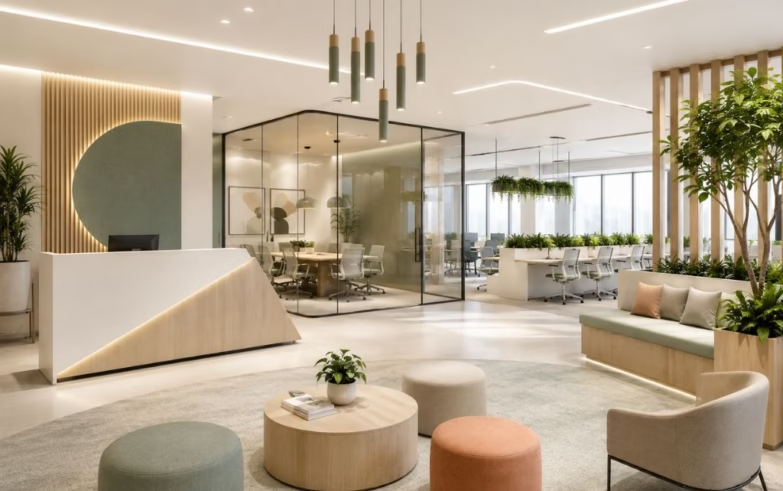
A brand is experienced long before someone reads its mission statement.
It is reflected in how a company communicates, how its people collaborate, how customers are welcomed and, increasingly, in the spaces where work happens.
For years, corporate identity was largely expressed through logos, colours, typography and communication. Today, leading organisations are taking that identity beyond visual branding and translating it into physical environments through thoughtful corporate interior design and workplace design.
This is where corporate identity becomes spatial identity.
A thoughtfully designed workplace does more than look impressive. It communicates what an organisation believes in, how it works and what kind of experience it wants to create for employees, clients and partners.
For businesses investing in corporate office interiors, the opportunity is no longer simply to create an attractive office. It is to build a workplace that feels unmistakably connected to the brand.
What Does Spatial Identity Really Mean?
Spatial identity is the physical expression of a brand’s personality, values and culture within a built environment.
But this should not be confused with placing a company logo behind reception or simply using brand colours across walls and furniture.
Effective office interior design goes much deeper.
Consider two organisations with completely different cultures. One may be built around innovation, experimentation and rapid collaboration. Another may prioritise precision, trust, confidentiality and structured decision-making.
Their workplaces should not feel identical.
The first might benefit from flexible collaboration zones, open innovation spaces and adaptable layouts. The second may require carefully planned meeting environments, acoustic privacy and a more refined spatial hierarchy.
The workplace becomes a physical interpretation of how the organisation thinks and operates.
That is the difference between decorating an office with a brand and designing a workplace around the brand.
Moving Beyond Logos and Brand Colours
One of the most common misconceptions in corporate office interior design is that brand integration is primarily visual.
Visual identity certainly matters, but it is only one layer of the workplace experience.
A brand can be expressed through materials, lighting, spatial planning, furniture, acoustics, technology and even the way employees move through the office.
A sustainability-focused organisation, for example, may communicate its values through responsibly sourced materials, energy-efficient lighting, biophilic elements and conscious material selection.
A technology company might express innovation through adaptable spaces, integrated digital systems and flexible collaboration environments.
A premium professional services brand may rely on understated materials, craftsmanship, sophisticated lighting and carefully designed client-facing spaces rather than obvious branding.
The strongest corporate interior design solutions do not constantly tell people what the brand stands for.
They allow people to experience it.
Workplace Design Is Becoming Part of Brand Strategy
Traditionally, workplace design and brand strategy were often treated as separate conversations.
That distinction is disappearing.
As companies compete for talent, strengthen organisational culture and encourage employees to spend meaningful time in physical workplaces, the office has become an important brand touchpoint.
Employees experience the workplace repeatedly. Clients form impressions from it. Prospective talent may encounter it before deciding whether they can imagine themselves working there.
This makes modern office interior design an extension of brand strategy and employee experience.
If an organisation describes itself as collaborative but its office consists largely of isolated workstations and closed rooms, there is a disconnect.
If a company promotes employee wellbeing but provides poor lighting, inadequate acoustics and limited spaces to recharge, employees notice the contradiction.
Physical environments make organisational promises visible.
A well-designed corporate workplace aligns what a company says with what people actually experience.
Turning Company Culture Into Space
Culture can be difficult to define because much of it is intangible.
Strategic workplace interior design gives it a physical form.
An organisation that values collaboration might create spaces that encourage spontaneous interaction alongside structured teamwork.
A company that values deep thinking may prioritise focus rooms, acoustic comfort and quiet zones.
A business with strong learning and development values might integrate knowledge-sharing areas, training spaces and informal mentoring environments.
Even circulation can influence culture.
The way departments are positioned, where shared amenities are located and how teams encounter one another throughout the day can either encourage interaction or reinforce organisational silos.
This is why effective workplace strategy and space planning should begin before selecting finishes, furniture or visual elements.
An experienced corporate interior design company needs to understand how the organisation works, how employees behave, what leadership wants to achieve and how the business may evolve.
Only then can brand DNA meaningfully translate into spatial design.
Designing for Employees and Clients
A workplace rarely serves a single audience.
Employees need environments that support productivity, collaboration, wellbeing and belonging. Clients need spaces that communicate confidence, credibility and professionalism. Leadership needs a workplace that supports business objectives while representing the organisation appropriately.
Strong commercial interior design and office space planning bring these expectations together.
The reception may establish the first impression, but the brand experience should continue throughout the workplace.
Meeting rooms, collaboration areas, workstations, social spaces, leadership zones and even transitional areas should feel connected by a consistent design language.
Consistency does not mean every space should look the same.
It means every space should feel like it belongs to the same organisation.
From Aesthetic Design to Authentic Experience
The most memorable workplaces are not necessarily the ones with the most dramatic interiors.
They are the ones that feel authentic.
Employees can quickly recognise when workplace branding is superficial. A motivational quote on a wall cannot compensate for an office that does not support how people actually work.
Authenticity comes from aligning brand identity, workplace culture and employee experience.
For a Design & Build company, this requires asking deeper questions before the design and execution process begins.
How does the organisation want people to feel when they enter the workplace?
Which behaviours should the environment encourage?
What should a client understand about the company without being told?
How should the workplace evolve as the organisation grows?
These questions move the conversation beyond interior decoration toward strategic corporate workplace design.
The Future of Brand Identity Is Spatial
As hybrid work changes the role of the office, physical workplaces need a stronger reason to exist.
The modern office is increasingly becoming a destination for collaboration, culture, connection, innovation and shared experiences that cannot always be replicated remotely.
That makes spatial identity even more important.
Companies now have an opportunity to transform their workplaces into living expressions of who they are.
At SLS Designs, we believe successful corporate workplaces should go beyond aesthetics. As a corporate interior design and Design & Build company in India, we translate business vision, brand identity and workplace requirements into environments that are functional, distinctive and designed around the people who use them.
Through strategic office interior design, workplace planning and end-to-end Design & Build solutions, the objective is not simply to create a visually impressive office, but to build a workplace where brand, culture and experience come together naturally.
Because when brand DNA is thoughtfully translated into space, the workplace stops being simply an office.
It becomes a physical expression of the organisation itself.