
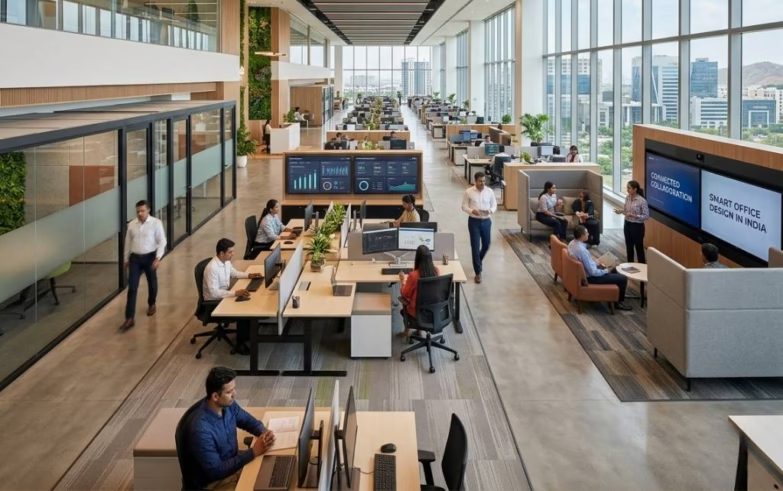
Smart Office Design in India: Transforming Modern Workspaces
The concept of the workplace is evolving rapidly. In India, businesses are moving beyond traditional office layouts and embracing smart office design to create more efficient, flexible, and future-ready environments.
Driven by advancements in AI, IoT, and workplace analytics, modern office interiors in India are becoming more intelligent—adapting to employee behavior, optimizing resources, and enhancing overall productivity.
At its core, smart office design is not just about technology, it’s about creating workplaces that respond to people, processes, and performance.
What is Smart Office Design?
Smart office design refers to the integration of technology, data, and design to create intelligent workspaces. These offices use connected systems to automate functions, improve efficiency, and deliver a seamless employee experience.
In the context of corporate interior design in India, this means combining:
- Smart lighting and climate control
- Occupancy sensors and space analytics
- Integrated meeting room technology
- Workplace management platforms
These elements work together to create a workplace that is both responsive and resource-efficient.
Why Smart Offices Are Gaining Momentum in India
The rise of smart workplaces in India is driven by several factors:
1. Hybrid Work Culture
With hybrid work becoming the norm, offices are no longer designed for full occupancy. Companies are investing in flexible workspace design supported by smart systems that track and optimize space usage.
2. Cost Optimization
Smart systems help reduce operational costs by optimizing energy usage and space efficiency, making them a key part of sustainable office design in India.
3. Employee Experience
Modern employees expect workplaces that are comfortable, intuitive, and tech-enabled. Smart offices enhance convenience through automation and seamless digital integration.
4. Data-Driven Decisions
Organizations are increasingly relying on data to improve workplace performance. Smart offices provide actionable insights into how spaces are used, enabling better planning and design.
Key Features of Smart Office Design
1. Intelligent Lighting Systems
Lighting plays a critical role in both energy efficiency and employee well-being. Smart lighting systems adjust brightness based on occupancy and natural light availability, reducing energy consumption while improving comfort.
2. Automated Climate Control
AI-enabled HVAC systems regulate temperature based on real-time usage, ensuring optimal comfort while minimizing energy waste, an essential aspect of energy-efficient office design.
3. Smart Meeting Rooms
Meeting rooms are equipped with automated booking systems, video conferencing tools, and occupancy sensors, enabling seamless collaboration in hybrid work environments.
4. Space Utilization Analytics
Data-driven insights help organizations understand how different areas are used. This allows for better workspace planning and design optimization, reducing unused or underutilized spaces.
5. Integrated Workplace Technology
From mobile apps for desk booking to centralized control systems, smart offices offer a connected experience that simplifies daily operations.
The Role of Design in Smart Offices
While technology is the backbone of smart offices, design ensures that it is effectively implemented. Poorly integrated technology can disrupt workflows, whereas thoughtful office interior design enhances usability.
At SLS Designs, the focus is on blending technology seamlessly into corporate office interiors. The goal is to ensure that technology remains intuitive and enhances the workspace without overwhelming users.
SLS Insight:
The most effective smart offices are those where technology is almost invisible, working in the background to improve efficiency and experience.
Smart Office Design and Sustainability
One of the biggest advantages of smart offices is their contribution to sustainability. By optimizing energy consumption and resource usage, businesses can significantly reduce their environmental impact.
Key sustainability benefits include:
- Lower energy consumption through automated systems
- Reduced operational costs
- Efficient use of space and resources
- Support for green building standards
This makes smart office design a critical component of sustainable corporate interiors in India.
Challenges in Implementing Smart Offices
Despite its advantages, implementing smart office design in India comes with challenges:
- Initial Investment: Smart technologies can increase upfront costs
- Integration Complexity: Ensuring compatibility between systems requires expertise
- User Adoption: Employees need to adapt to new technologies
However, with the right planning and execution, these challenges can be effectively managed.
The Future of Smart Workspaces in India
The future of office interior design in India is increasingly data-driven and technology-enabled. As AI continues to evolve, workplaces will become more predictive, anticipating employee needs and optimizing operations in real time.
Emerging trends include:
- AI-driven workplace personalization
- Advanced occupancy analytics
- Fully integrated smart building ecosystems
These innovations will further redefine how offices are designed and experienced.
Conclusion
Smart office design is no longer a luxury, it is becoming a necessity for businesses looking to stay competitive in a rapidly evolving work environment.
By combining technology with thoughtful design, organizations can create modern workspaces in India that are efficient, sustainable, and employee-centric.
With deep expertise in corporate interior design, SLS Designs continues to help businesses navigate this transformation, delivering smart, future-ready workplaces that align with both operational goals and employee expectations.