
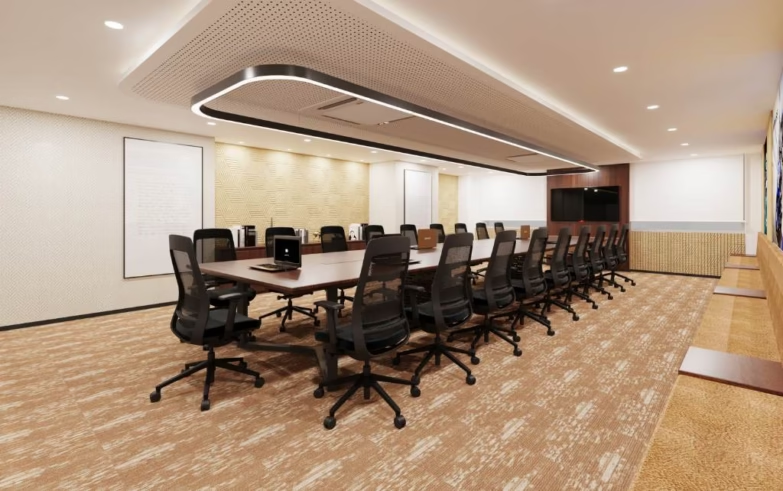
How Corporate Office Interior Design Is Evolving Across Indian Metro Cities
Corporate office interior design in India has undergone a significant transformation over the past decade. Across major metro cities like Bengaluru, Mumbai, Pune, Hyderabad, and Chennai, offices are no longer designed merely to accommodate teams—they are built to support productivity, culture, flexibility, and long-term business growth.
As work models evolve and employee expectations shift, corporate interiors are becoming more strategic, technology-enabled, and human-centric. This evolution reflects broader changes in how Indian businesses operate, collaborate, and scale.
From Traditional Offices to Experience-Led Workspaces
Earlier, corporate office interiors in Indian metro cities followed a uniform approach, fixed workstations, closed cabins, and formal meeting rooms. Today, that model is rapidly giving way to experience-led workspace design.
Modern corporate interiors now focus on:
- Flexibility instead of rigid layouts
- Collaboration alongside focused work
- Employee comfort and well-being
- Brand expression within the workspace
This shift is especially visible in metro cities where competition for talent and innovation is high.
Key Trends Shaping Corporate Office Interiors in Metro Cities
1. Hybrid-Ready and Flexible Layouts
With hybrid work becoming a long-term reality, office interiors are being designed to support fluctuating occupancy. Corporate office interior design now includes:
- Modular workstations
- Activity-based work zones
- Flexible meeting and collaboration spaces
This allows offices in metro cities to adapt quickly to changing team sizes and work patterns.
2. Smarter Use of Space
Space efficiency is a major consideration, particularly in cities like Mumbai and Bengaluru where commercial real estate comes at a premium. Modern office interiors focus on:
- Optimised workstation planning
- Multi-functional spaces
- Reduced underutilised areas
Well-planned corporate interiors ensure maximum value from every square foot.
3. Technology-Integrated Office Design
Technology is no longer an add-on, it is embedded into office interior planning. Across Indian metro cities, corporate offices are integrating:
- Smart lighting and climate systems
- Video conferencing-enabled meeting rooms
- Seamless IT and access control infrastructure
These elements support productivity while improving operational efficiency.
4. Employee-Centric Design and Well-Being
Employee well-being has become central to corporate interior design. Offices now include:
- Ergonomic furniture
- Acoustic planning for reduced noise
- Breakout zones and cafeterias designed for comfort
Designing for well-being helps improve engagement, retention, and overall workplace satisfaction.
5. Sustainability and Responsible Design
Sustainability is no longer optional for corporate offices in metro cities. Businesses are increasingly prioritising:
- Energy-efficient lighting and systems
- Eco-friendly and low-VOC materials
- Sustainable sourcing and waste reduction
Green office interiors support ESG goals while lowering long-term operating costs.
City-Specific Influences on Corporate Office Interior Design
Bengaluru
As India’s technology hub, Bengaluru offices emphasise agility, collaboration, and innovation. Corporate interior design here often includes open layouts, collaboration zones, and informal meeting spaces that support fast-paced work environments.
Mumbai
Mumbai offices focus heavily on space optimisation and premium finishes. Corporate interiors are designed to balance efficiency with brand presence, often within compact floor plates.
Other Metro Cities
In cities like Pune, Hyderabad, and Chennai, corporate office interiors blend scalability with functionality, supporting growth while maintaining cost efficiency.
The Growing Importance of Brand Expression in Office Interiors
Modern corporate office interiors serve as a physical extension of a company’s brand. From reception areas to boardrooms, design elements now communicate:
- Professionalism
- Company values
- Organisational culture
For clients and employees alike, the office has become a key touchpoint in brand perception.
What Businesses Should Consider When Planning Office Interiors in Metro Cities
When designing or upgrading office interiors, businesses should evaluate:
- How teams work today and how they may evolve
- Future scalability requirements
- Technology and infrastructure needs
- Employee experience and comfort
- Compliance, safety, and sustainability standards
A strategic approach ensures office interiors remain relevant for years, not just trends.
The Role of a Corporate Interior Design Partner
As corporate office interior design becomes more complex, choosing the right design-and-build partner is critical. An experienced partner helps:
- Align design with business objectives
- Manage timelines and budgets effectively
- Deliver consistent quality across execution
This is especially important in fast-moving metro city environments.
Why SLS Designs Understands Metro City Workspaces
At SLS Designs, we specialise in corporate interior design solutions tailored to the unique demands of Indian metro cities. Our approach combines:
- Strategic space planning
- Smart, functional design
- Seamless execution and delivery
We design offices that support productivity, reflect brand identity, and adapt to future growth.
Conclusion
Corporate office interior design across Indian metro cities is evolving from static layouts to dynamic, people-first environments. As businesses rethink how work happens, offices are becoming smarter, more flexible, and more aligned with human needs.
Investing in thoughtful corporate interiors is no longer just about aesthetics, it’s about building workspaces that enable performance, culture, and long-term success.